
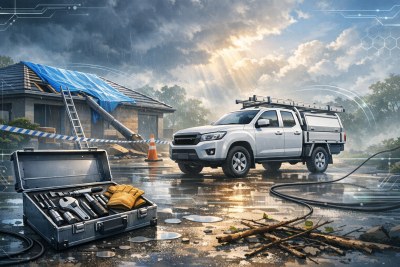
For trade businesses, the immediate impact is not limited to damaged homes and household contents. A severe storm can write off a ute, flood a trailer, damage site materials, soak power tools, interrupt access to a job site or delay subcontracted work. In hard-hit communities such as Logan, the Lockyer Valley and parts of the NSW Mid North Coast, the recovery effort also draws heavily on builders, roofers, electricians, plumbers, glaziers, assessors and repair networks, which can stretch timeframes even where cover is in place.
The practical lesson is that storm damage rarely fits neatly into one policy section. A business owner may need to consider whether losses sit under tools and equipment cover, commercial property, contract works, motor, trailer cover, general property, business interruption or another section entirely. A work vehicle damaged by hail or falling branches may depend on the details of commercial vehicle insurance, including whether business use, modifications, canopies, racking, trailers and permanently fitted equipment have been properly disclosed.
Evidence also matters. After a fast-moving event, insurers commonly need photos, repair invoices, proof of ownership, service records, serial numbers, job-site details and information about temporary repairs. Tradies cleaning up their own premises or helping customers should be careful to separate personal, business and client property losses, and to keep records of emergency work, disposal of damaged goods and any safety steps taken before repairs begin.
The declaration does not mean every loss will automatically be covered. Policy wording, exclusions, excesses, sublimits, waiting periods and maintenance conditions still apply. Food spoilage and power outage claims may be relevant for some households, but a trade business should check whether its own policy responds to spoiled stock, damaged materials or lost income from interrupted work.
For tradies outside the affected areas, the message is still timely. Current replacement values for tools, trailers, site gear and vehicles can move quickly, and underinsurance may only become obvious after a major claim. Reviewing sums insured, storage conditions, storm and flood definitions, and how quickly claims must be notified can make the next severe weather event less chaotic, even if it cannot be avoided.
Please Note: We do not endorse any specific products or companies. Some content is sourced from third parties, including press releases, and may not be independently verified for accuracy or completeness.




