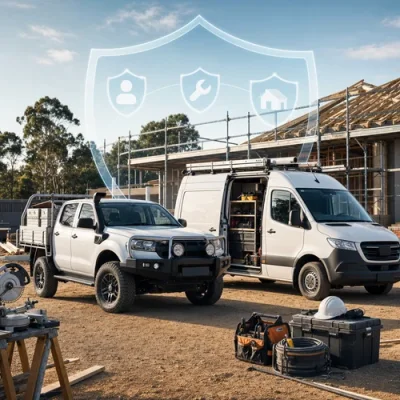
What is commercial vehicle insurance?
Commercial vehicle insurance is cover for vehicles used for business purposes. For tradespeople, that can include vehicles used to travel to job sites, carry tools and materials, tow equipment or support day-to-day business operations.
Unlike a personal motor policy, a commercial vehicle policy is generally designed around business use. Depending on the insurer and policy, it may allow for multiple drivers, different vehicle types and optional features that reflect how the vehicle is used in the trade.
Commercial vehicle insurance can apply to a range of work vehicles, including cars, utes, vans and trucks. The right structure depends on the vehicle, how it is used and the risks the business wants to insure against.
Why commercial vehicle insurance matters for tradies
For many tradies, a vehicle is more than transport. It may operate as a mobile workshop, storage space and essential part of the job. If a work vehicle is damaged, stolen or off the road after an incident, the disruption can affect job scheduling, access to tools and the ability to move materials.
Insurance does not prevent accidents or theft, but it can provide a way to manage some of the financial consequences when insured events occur. This is particularly important where repair costs, replacement costs, third-party damage claims or loss of tools could place pressure on cash flow.
Commercial motor vehicle cover may be considered as part of a broader trades insurance review. If you are comparing options or requesting quotes, you can start with a trades insurance quote request and check whether commercial motor cover is relevant to your circumstances.
Common work vehicles used by tradespeople
The vehicles used by tradies vary by occupation and business size. Common examples include:
- Vans: often used where enclosed storage and easy access to tools, parts and equipment are important.
- Utes: commonly used by builders, landscapers and other trades that carry bulky materials or tow trailers.
- Trucks: often used in larger operations or where heavier loads and larger quantities of materials are transported.
- Cars and light commercial vehicles: may be used for site visits, quoting, supervision or smaller-scale work.
Each vehicle type can create different insurance considerations. For example, a van carrying equipment may raise different questions from a ute used to tow, or a truck used to transport larger quantities of materials.
Main types of commercial vehicle cover
Policy names and inclusions vary between insurers, but the following cover types are commonly considered when reviewing commercial vehicle insurance.
| Cover type | What it generally relates to | Why it may matter for tradies |
|---|---|---|
| Third-party property damage | Damage your insured vehicle causes to someone else's property. | May help manage the cost of third-party property damage claims after an accident. |
| Comprehensive cover | A broader level of cover that may include accidental damage, theft, vandalism, fire, hail or other insured events, depending on the policy. | May protect the work vehicle itself as well as third-party property damage exposures. |
| Optional add-ons | Additional features such as towing, roadside assistance or a hire vehicle option, where available. | May help reduce disruption if the main work vehicle cannot be used after an insured event. |
| Tools and equipment extensions | Cover that may apply to tools or equipment in transit, where included or added to the policy. | Can be relevant because many tradies store or transport important gear in their vehicle. |
Liability and third-party property damage
Third-party property damage cover is an important part of many commercial vehicle policies. It is designed to respond where the insured vehicle causes damage to another person's property, subject to the terms, conditions and limits of the policy.
For a trade business, this could involve anything from minor damage to another vehicle through to more significant property damage after a collision. Without suitable cover, the business may need to meet those costs directly.
Commercial vehicle liability is separate from broader business liability issues. Tradies reviewing their overall insurance needs may also want to understand public liability insurance requirements for Australian tradies, as that type of cover deals with different risks.
Tools and equipment carried in vehicles
Many tradespeople use their vehicles to store or transport tools, materials and equipment. A vehicle incident, theft or damage event can therefore affect more than the vehicle itself.
Some commercial vehicle policies may include or offer cover for tools and equipment, particularly while in transit. In other cases, tools may need to be insured under a separate tools or equipment policy or an optional extension. The detail matters because limits, exclusions and storage conditions can vary.
If your work vehicle regularly carries valuable tools, it may be useful to review how tools and equipment insurance for Australian tradies can operate alongside vehicle cover.
Optional features and add-ons to review
A commercial vehicle policy may include optional features that can be useful for trade work. Availability depends on the insurer and the policy, so it is important to check the policy wording rather than assuming an add-on is included.
- Towing: may assist with moving the vehicle after an insured incident.
- Roadside assistance: may help with breakdown-related issues where offered.
- Hire vehicle options: may provide access to a temporary replacement vehicle after certain insured events.
- Tools or equipment extensions: may help protect selected items carried in the vehicle, subject to limits and conditions.
- Multiple-driver arrangements: may be relevant where employees or subcontractors use the vehicle.
The value of any optional feature depends on how the vehicle is used and what disruption the business could reasonably manage if the vehicle were unavailable.
What can affect commercial vehicle insurance premiums?
Insurers assess a range of factors when pricing commercial vehicle insurance. While each insurer uses its own underwriting approach, common considerations include the following.
Vehicle type and value
The make, model, size and value of the vehicle can influence the premium. Larger vehicles, more expensive vehicles or vehicles with specialised fit-outs may present different repair or replacement costs.
How the vehicle is used
Insurers may consider whether the vehicle is used daily, how far it travels, what it carries and whether it is used to tow or transport heavy materials. Higher mileage or more intensive business use may affect the risk profile.
Drivers and driving history
The experience and driving records of people who operate the vehicle can be relevant. A history of accidents or traffic violations may affect how an insurer assesses the risk.
Location and storage
Where the business operates and where the vehicle is kept can also matter. Areas with higher traffic exposure, theft risk or weather-related risks may influence the cost and conditions of cover.
Selected cover and excess
The level of cover, policy limits, optional add-ons and excess amount can all affect the premium. Lower premiums may come with different limits, exclusions or out-of-pocket costs at claim time.
How to compare commercial vehicle insurance
Comparing commercial vehicle insurance is not only about the premium. A cheaper policy may not provide the same inclusions, limits or claims support as another option. A more useful comparison looks at how the policy would respond to realistic business scenarios.
- List how the vehicle is used: include work travel, towing, materials carried, drivers and parking arrangements.
- Check the level of vehicle cover: compare third-party property damage and comprehensive options.
- Review limits and excesses: understand the maximum amounts payable and what you may pay when claiming.
- Read exclusions and conditions: check situations where cover may be restricted or unavailable.
- Consider add-ons: decide whether options such as hire vehicle, towing, roadside assistance or tools cover are relevant.
- Review claims processes: understand how to lodge a claim and what evidence may be required.
You can also use a trades insurance calculator as a general planning tool when thinking about cover levels across your business insurance needs.
Common mistakes to avoid
Underinsuring the vehicle or its contents
Underinsurance can occur when the insured amount does not reflect the vehicle's value, modifications, fit-outs or the tools and equipment being carried. Regular reviews can help identify whether cover still reflects the current business setup.
Assuming tools are automatically covered
Tools and equipment stored in a vehicle may not be covered in the way a tradie expects. Some policies apply sub-limits, storage conditions or exclusions. Others may require a separate tools policy or optional extension.
Ignoring exclusions and limits
Every policy has conditions, limits and exclusions. These details can affect whether a claim is accepted and how much is payable. Reading the policy wording before buying or renewing cover can reduce surprises later.
Not updating the policy when the business changes
Business changes can affect cover. Examples include buying a new vehicle, changing drivers, expanding into new service areas, carrying different equipment or changing how often the vehicle is used. Insurers generally need accurate information to assess and maintain cover.
Steps that may help if you need to claim
If an incident occurs, the claim process will depend on the insurer and policy. The following steps are commonly useful when preparing a commercial vehicle insurance claim.
- Record the details: note the date, time, location and circumstances of the incident.
- Collect evidence: take clear photographs of damage and gather contact details for witnesses where relevant.
- Keep documents together: retain purchase receipts, maintenance records, policy documents and correspondence.
- Contact the insurer promptly: report the incident and ask what information, forms or deadlines apply.
- Work with assessors: provide requested information and cooperate with any assessment of the damage.
- Follow up when needed: keep a record of claim communications and check progress if further information is required.
Clear records can help reduce delays, but claim outcomes always depend on the policy terms, the incident and the insurer's assessment.
Reviewing cover over time
Commercial vehicle insurance should be reviewed as the business changes. A policy that suited one vehicle and one driver may not suit a growing business with multiple vehicles, employees or different work locations.
Useful review points include renewal time, after buying or selling a vehicle, when adding drivers, when changing the type of work performed, or when tools and equipment values have changed.
The aim of a review is not to buy the most expensive policy, but to understand whether the policy still matches the vehicle, the way it is used and the risks the business wants to insure against.
Key takeaways
- Commercial vehicle insurance is designed for vehicles used in business or trade activities.
- Tradies commonly insure utes, vans, trucks and other work vehicles used to travel, carry tools and transport materials.
- Cover may include third-party property damage, comprehensive vehicle cover and optional add-ons.
- Tools and equipment carried in a vehicle may need separate attention because cover conditions vary.
- Premiums can be affected by the vehicle, drivers, usage, location, cover level and selected excess.
- Reading exclusions, limits and claim requirements is an important part of comparing policies.
Published: Thursday 4th December, 2025
Last updated: Tuesday 6th October, 2026