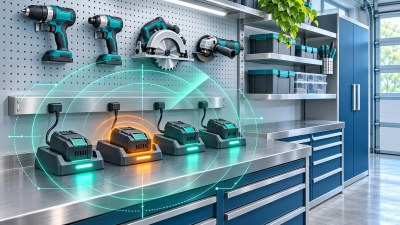

For trade businesses, the issue is not limited to e-bikes and scooters. Battery-powered drills, grinders, saws, garden tools, torches, testing equipment, mobile devices and portable chargers are now standard equipment across many trades. Earlier insurer data this year pointed to batteries and power or garden tools as a significant share of lithium-ion related home claims, which matters because many self-employed tradies store business gear at home, in a garage or in a vehicle overnight.
The insurance angle is also becoming clearer. Recent industry reporting has noted that insurers are starting to ask more detailed questions about lithium-ion batteries in commercial risks, including where batteries are charged, how damaged units are isolated and whether charging practices are documented. That does not mean every tradie should expect an immediate premium change, but it does suggest that battery management may increasingly sit alongside theft prevention, hot works controls, site safety and asset records when insurers assess risk.
Practical steps for trade businesses are likely to be simple but important:
- Use manufacturer-approved chargers and avoid mixing chargers, batteries and tools from incompatible systems.
- Do not charge batteries on combustible surfaces, near fuels, solvents, sawdust, rags or stored packaging.
- Keep damaged, swollen, overheating or dropped batteries out of service and away from other stock or tools.
- Avoid unattended overnight charging, particularly in garages, sheds, vans or workshops without suitable fire detection.
- Maintain an inventory of battery tools, chargers and higher-value tools and equipment, including photos and replacement values.
From an insurance perspective, the development is a reminder to check the detail rather than assume all losses will be treated the same way. Policies may differ on business property stored at home, tools left in vehicles, fire damage to stock, electrical safety conditions, disclosure obligations and exclusions for faulty or non-compliant equipment. Tradies reviewing broader cover levels can also use general estimating tools, such as the Trades Insurance Calculator, as a starting point for thinking about values and exposures.
The key limitation is that battery fire data is still developing and insurer responses will vary by product, occupation, location and premises type. Even so, the direction is clear: as rechargeable tools become more central to trade work, safe charging and storage are no longer just housekeeping issues. They are part of keeping people safe, protecting essential gear and reducing avoidable disruption to a working trade business.
Please Note: We do not endorse any specific products or companies. Some content is sourced from third parties, including press releases, and may not be independently verified for accuracy or completeness.