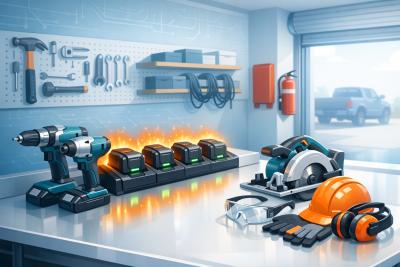

The concern centres on thermal runaway. In simple terms, this is when a battery failure generates heat and flammable gases that can rapidly escalate into fire or explosion. The original industry discussion focused heavily on large battery energy storage systems used in the renewable energy sector, but the lesson is highly relevant to trade businesses that charge, transport or store multiple batteries in vans, workshops, garages and site containers.
For tradies, the practical question is not whether lithium-ion batteries should be avoided. They are too useful and too embedded in modern work. The question is whether the business can show sensible controls if something goes wrong. Insurers are increasingly interested in charging practices, storage conditions, separation from combustible materials, maintenance records and whether damaged batteries are removed from use quickly.
This matters because a battery incident can trigger more than one type of loss. A workshop fire could damage tools, stock, customer property, vehicles and the premises itself. A site fire could lead to third-party property damage or injury allegations. A destroyed tool set could also create downtime if the business cannot complete booked jobs. That makes it important to review tool cover, property cover, public liability insurance and any business interruption protection as connected parts of the same risk picture.
Trade business owners should also think about sums insured. Battery-powered tools and chargers can add up quickly, especially where a crew uses multiple kits across several vehicles. Keeping an up-to-date asset list, photos, receipts and serial numbers can make a major difference at claim time. If values have crept up, it may be worth establishing insurance sums insured again rather than relying on last year’s figures.
Simple controls can help. Charge batteries on non-combustible surfaces, avoid overnight charging where possible, keep batteries away from heat and moisture, follow manufacturer instructions, do not use swollen or damaged packs, and consider how batteries are secured during transport. Businesses working with solar, EV charging or larger storage systems may need more formal procedures and professional assistance to match their risk profile with suitable cover.
The takeaway for tradies is clear: lithium-ion batteries are useful, but they should be managed like any other business-critical hazard. Good habits may reduce the chance of a fire, and good insurance planning may reduce the financial shock if one occurs.
Please Note: If this information affects you or is relevant to your circumstances, seek advice from a licensed professional.