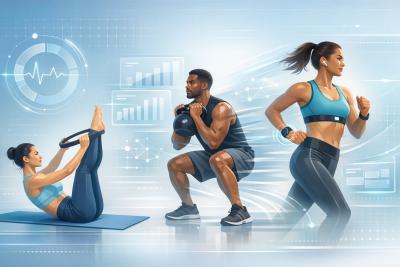

Notable trends include:
- Fitness Programs for Older Adults: Emphasizing the fitness needs of the baby boomer and older generations, these programs aim to improve health-related quality of life and promote independent living.
- Pilates: Built on six key principles—breathing, centering, concentration, control, flow, and precision—Pilates has gained popularity for its focus on core strength and adaptability to various experience levels.
- Exercise for Mental Health: Programs designed to improve aspects of mental health, such as reducing feelings of anxiety, stress, and depression, through aerobic training, resistance training, and mind-body practices like yoga and tai chi.
- Traditional Strength Training: Incorporating the use of barbells, dumbbells, and kettlebells to improve or maintain muscular fitness by manipulating repetitions, sets, tempo, load, and exercise selection.
- Wearable Technology: Devices like fitness trackers, smartwatches, heart rate monitors, and GPS tracking devices that can monitor various health metrics, including heart rate, calories, sitting time, sleep, and temperature.
Shaun Krenz, co-founder and Director of the AusFitness Expo and AusFitness Industry, noted that fitness is expanding beyond traditional boundaries to meet people where they are, from programs designed to enhance longevity and quality of life to the integration of recovery and wearable technology.
The report underscores a fitness market that is maturing: more inclusive, more health-integrated, more sustainable, and more reflective of how Australians want to move today.
Please Note: If this information affects you or is relevant to your circumstances, seek advice from a licensed professional.